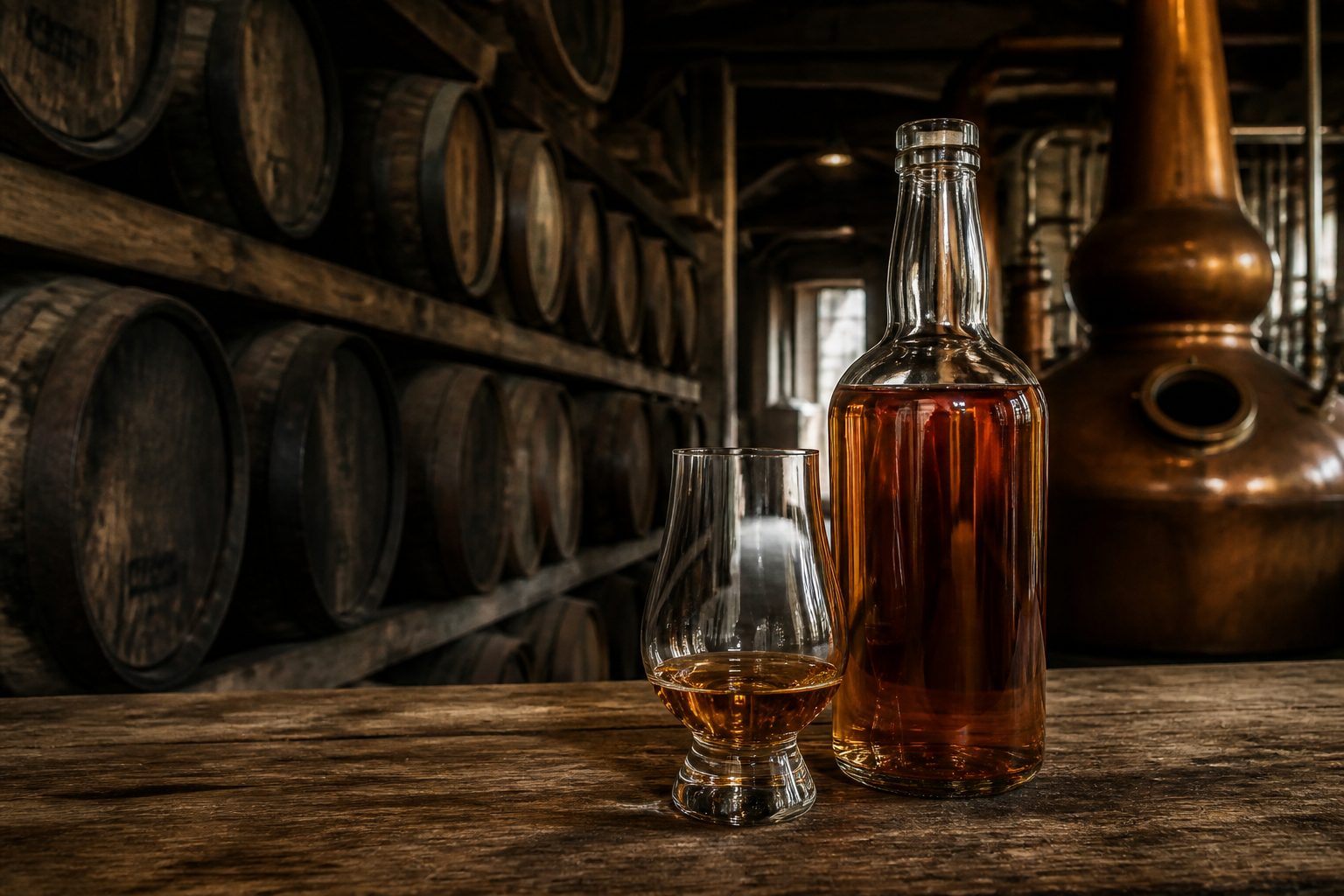
Five base spirits sit behind almost every cocktail on a happy-hour menu: whiskey, rum, gin, tequila, and vodka. Each page below covers how the spirit is made, the regional styles you will see on a label, what “quality” means in that category, and where the marketing outruns the facts.

No bottle recommendations and no buy links. This is label literacy. When you know what a term is required to mean, you can tell which shelf a bar is pouring from before the drink arrives.

Every distilled spirit is the same four steps

1. Get sugar. Yeast can only ferment sugar. Sugarcane and agave already contain it. Grain and potatoes store starch instead, so they get milled and cooked with enzymes — malting or added enzymes — to convert starch to sugar first. That cooked, sugary slurry is the mash.

2. Ferment. Yeast eats the sugar and produces alcohol plus flavor compounds. The result is a beer-like liquid, usually 5–10% alcohol, called the wash. Fermentation is where a lot of the character is made, and it is the step brands talk about least.

3. Distill. Heat separates alcohol and aromatics from water. Two designs dominate. A pot still is a batch kettle: less efficient, carries more of the raw material through, so the spirit tastes like where it came from. A column still runs continuously and can strip a spirit to nearly pure alcohol, so it tastes like almost nothing. Neither is better. They are choices about how much to keep.

4. Finish. Rest in oak, or do not. Oak adds color, vanilla and caramel notes, tannin, and — through slow oxidation — smoothness. Then dilute to bottling strength with water. Some categories also allow additives at this point, which is the part worth reading closely.

What actually makes them different

SpiritMade fromUsual stillOak agingCharacter comes from
WhiskeyGrain mash — corn, rye, barley, wheatBoth; column for bourbon, pot for single maltRequiredGrain bill and the barrel
RumSugarcane — molasses or fresh cane juiceBothOptionalFermentation, still type, tropical aging
GinNeutral spirit plus botanicalsColumn, then redistilled with botanicalsRareJuniper and the botanical bill
TequilaBlue Weber agave, cookedPot, twiceOptional, and it defines the classHow the agave was cooked and milled
VodkaAny fermentable — grain, potato, grapeColumn, to near-neutralNoBase material and texture

The five primers

Whiskey — Grain, oak, and a lot of law. Bourbon versus rye versus Tennessee versus Scotch versus Irish, what a straight whiskey is, and why an age statement is more informative than a proof.

Rum — The least regulated major category, which is why it is the most interesting and the most misleading. Molasses versus agricole, pot-still funk, and the undeclared sugar problem.

Gin — A flavored spirit with a legal floor: juniper has to lead. London dry, Plymouth, Old Tom, genever, navy strength, and why botanical counts mean nothing.

Tequila — One plant, one region, and the tightest additive rules worth learning. Blanco, reposado, añejo, what 100% agave means, and where mezcal sits.

Vodka — Defined by the absence of character, which makes the base material and the texture the only real variables. Wheat versus rye versus potato, and what filtration claims are worth.

Four questions that work on any label

What was it made from? A category that hides its base material — a vodka that will not say which grain, a rum that will not say cane juice or molasses — is telling you something.

How long in wood, and stated how? A number of years is a claim a regulator can check. “Aged in oak,” “reserve,” “small batch,” and “handcrafted” are not defined terms in most jurisdictions.

What proof? Bottling strength is a cost decision as much as a flavor one. Water is cheaper than spirit. Anything above 40% ABV was diluted less, and it will hold up better in a shaken drink.

What is allowed to be added? This varies more than anything else. Scotch permits plain caramel color and nothing else. Bourbon permits nothing but water. Tequila permits four additives up to 1% by weight, undeclared. Rum, in most places, permits whatever the producer likes.

Then use it

Specs that put these to work are in cocktail recipes. The tools are in home bar basics. Glassware and bar-tool searches are on Shop — we link tools and glass, never bottles. To go out instead, On now shows what is running.

Notes

Production and labeling rules cited across these pages come from the governing standards for each category: US federal standards of identity for distilled spirits, the Scotch Whisky Regulations, EU spirit drink definitions, Mexico’s NOM standards for tequila and mezcal, and the Martinique AOC rules for rhum agricole. Where a category has no binding rule, the pages say so.